


Loopa Blog
The Loopa blog is where Patrick Bass, the founder of Loopa, writes about health, nutrition and fitness tracking. Newest first.
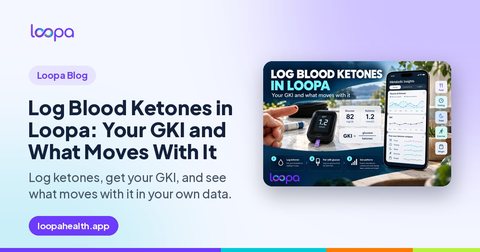
Log Blood Ketones in Loopa: Your GKI and What Moves With It
Loopa now logs blood ketones, pairs them with glucose for your GKI, and shows what moves with them in your own data. Part of Loopa Premium.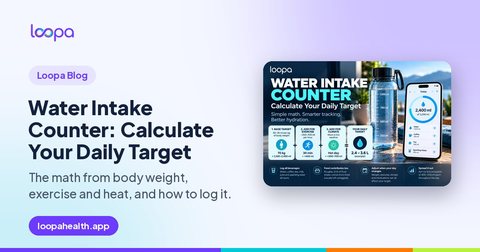
Water Intake Counter: Calculate Your Daily Target
Calculate a daily water target from body weight, exercise and heat, see the math line by line, and log it in fixed units so the number holds up.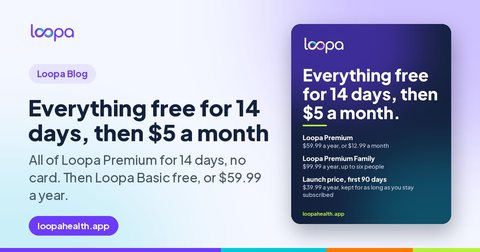
Everything free for 14 days, then $5 a month
With Loopa 1.5, all of Loopa Premium is free for 14 days, no card. Then Loopa Basic stays free, or Premium is $5 a month. Here is how it works.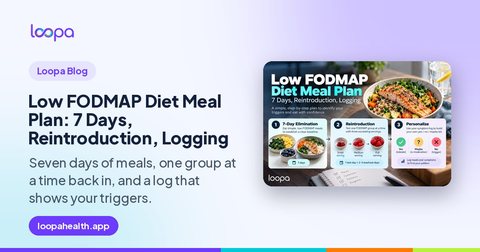
Low FODMAP Diet Meal Plan: 7 Days, Reintroduction, Logging
A 7-day low FODMAP meal plan, a one-group-at-a-time reintroduction schedule, and the symptom-logging method that shows which FODMAPs are yours.
Daily Water Intake Chart: How Much Water Do You Really Need?
Use a practical daily water intake chart, learn what counts toward hydration, and adjust for workouts and heat without overdrinking.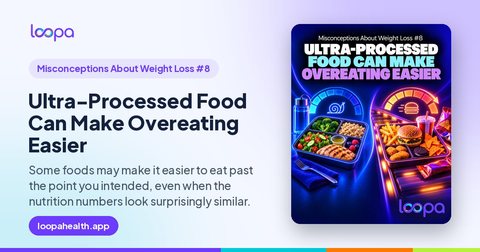
Ultra-Processed Food Can Make Overeating Easier
Some foods may make it easier to eat past the point you intended, even when the nutrition numbers look surprisingly similar.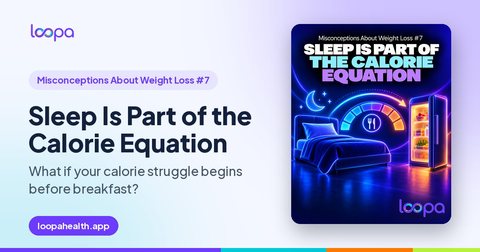
Sleep Is Part of the Calorie Equation
What if your calorie struggle begins before breakfast? In a randomized trial, adults who extended short sleep ate less, even though nobody put them on a diet.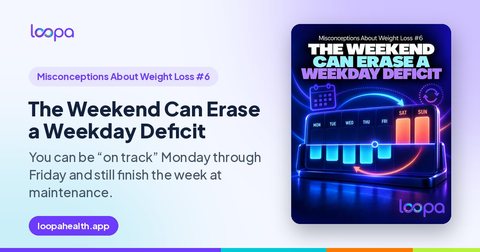
The Weekend Can Erase a Weekday Deficit
You can be “on track” Monday through Friday and still finish the week at maintenance. The culprit usually isn’t one meal.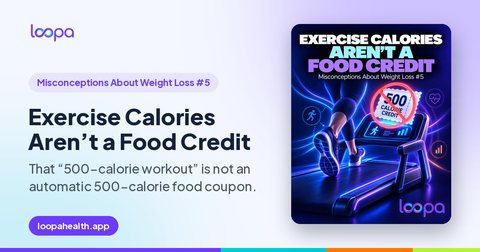
Exercise Calories Aren’t a Food Credit
That “500-calorie workout” is not an automatic 500-calorie food coupon.
Your Smartwatch Is Guessing Your Calorie Burn
Your watch can count steps and track heart rate, but the calorie number is not a direct measurement. It is an algorithmic estimate.
Your Metabolism Didn’t Break. It Adapted.
Your metabolism probably didn’t break. It did what metabolism is designed to do: adapt when your body got smaller and energy intake dropped.
3,500 Calories ≠ One Predictable Pound
The math looks airtight: cut 500 calories a day, lose exactly one pound a week. There’s just one problem: your body never agreed to that spreadsheet.
Your Scale Isn’t a Fat Scanner
One bad weigh-in can make a good week look like a failure. But your scale measures everything in your body, not just fat.


