


Learn
Understand the numbers behind health and fitness tracking
Plain explanations of calories, macros, weight trends, hydration, fasting and nutrition labels: what each number means, where it came from and what it cannot tell you. Each guide is useful whether you use Loopa or not.
Read the explanation. Open the sources. Ignore the Loopa part if you want. Every guide gives the short answer first, separates what the evidence shows from what it does not, and keeps how Loopa handles the topic in one clearly marked section near the end. Every source we cite.

Energy and weight
- Energy and weightWhat is a calorie deficit?What does a calorie deficit actually mean, and why does the scale not follow the arithmetic day to day?
- Energy and weightEstimate BMR and TDEE, then understand the estimateHow are BMR and TDEE estimated, and how far can one estimate be trusted?
- Energy and weightWhy “3,500 calories equals one pound” breaks down over timeDoes a 3,500-calorie deficit always produce one pound of weight loss?
- Energy and weightWhy does weight fluctuate from day to day?Why does body weight move from one day to the next?
- Energy and weightIs it a plateau, or just a noisy few weeks?What can make weight loss slow or stall, and how can a longer trend help tell the possibilities apart?
- Energy and weightDoes food tracking help? What the evidence actually showsWhat does research show about food logging and weight change, and what can that research not prove?
Nutrition
- NutritionProtein, carbs and fat: what each one actually doesWhat do protein, carbohydrate and fat each do in the body?
- NutritionHow to read a nutrition label, and what the numbers can’t tell youHow do you read a Nutrition Facts panel, and how precise are its numbers?
- NutritionHow much water do you actually need?Is there one daily water target, and where did the eight-glasses idea come from?
Eating patterns
Bariatric and medical weight management
No guide matches that. Try a different word, or tell us what you were looking for.
From the Loopa blog
All blog articles
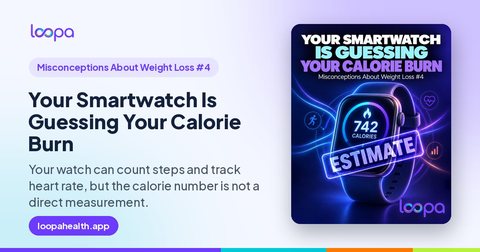
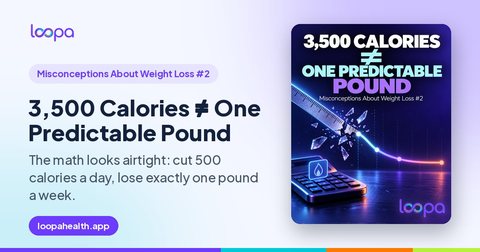


About these guides
Are these guides medical advice?
No. They explain how something works without prescribing numbers for any individual. Anything involving a medical condition, a medication, pregnancy or nursing belongs with a doctor, pharmacist or dietitian who can see your whole situation.
Do I need Loopa to use these?
No. They are written to be useful whether or not you install anything. Each one ends with a clearly marked section on how Loopa handles that topic, so you can read the explanation and skip the product part.
What does "Last reviewed" mean?
It is the date the guide’s explanation and sources were last checked. It is an editorial review, not a medical approval. A guide that has not yet been reviewed under the current standard shows no date rather than one it has not earned.
How often are these reviewed?
A guide on a health-sensitive topic is flagged for review six months after its last review, and the others after a year, or sooner when the guidance it relies on changes. If you find something inaccurate, tell us.